Rotate Your Device
to continueBusiness Psychology.

Victory Executive Luxury
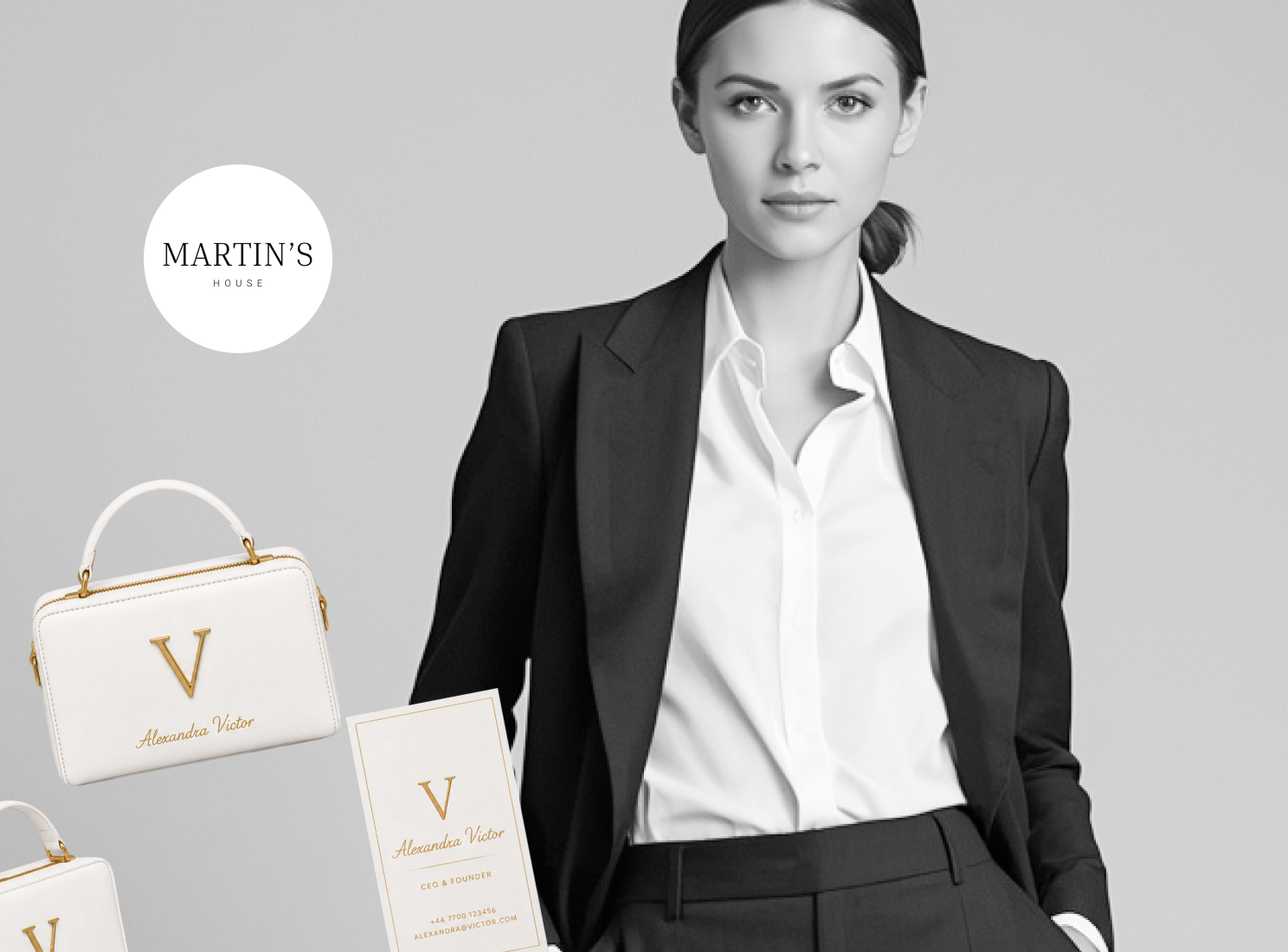
Dressed Like a Leader: The Business Psychology Behind Structured Tailoring.
A Victory-Executive Luxury Editorial by Martin's House.
There is a difference between dressing well and dressing like a leader. Many people wear expensive clothes and luxury brands, and know little about fashion, but leadership is not fashion - leadership is presence, and presence has a psychology. You can recognise a leader before she introduces herself, before she speaks, and before she sits at the table - you recognise it through structure, precision, simplicity, movement, and authority. All of these elements begin with one silent but powerful language: Structured tailoring. This is the psychology behind executive dressing, not trends, labels, or excess, but strategic visual leadership.
I. What Does It Mean to Dress Like a Leader?
To dress like a leader means that your presence talks about certainty, your wardrobe reflects decision-making, and your image aligns with your position. A leader's wardrobe is not emotional chaos - it's a controlled intention. When a woman CEO dresses like a leader, she understands something most people ignore: What you wear affects how you think, move, decide, and lead. This is why executive dressing is psychological: clothing not only changes how people see you, but also your posture, confidence, body language, and internal discipline, and eventually your leadership identity.
The Psychology Behind Structured Tailoring.
Structured tailoring is more than aesthetics - it's psychological architecture. A tailored jacket changes how your shoulders sit, a structured coat changes how you walk, and tailored trousers influence posture and movement. This creates something profound: Your wardrobe begins teaching your body how to lead - that is the hidden psychology behind executive dressing.
Why Expensive Clothing Is Not Enough.
Luxury without alignment is noise. A woman can wear expensive clothing and still not look like a leader. Why? Because leadership dressing is not about price - it's about precision, discipline, coherence, and positioning. A true CEO's wardrobe is intentional - every detail answers a question: Why this silhouette? Why this colour? Why this structure? Why this balance? Leadership dressing always has a reason, but what is that reason?
You Know a Leader by What She Wears.
A leader's wardrobe reveals how she thinks, operates, and leads. Not through excess, but through clarity - a woman CEO who dresses like a leader appears stable, controlled, focused, and strategic. Your wardrobe does not distract from your authority - it reinforces it.
II. The Psychology of Colour in Executive Leadership.
Colour is not style or visual - it's communication. The colours a woman CEO wears influence perception.
Black - Power and Control.
Black expresses authority, precision, and emotional discipline - it creates distance and respect.
White - Clarity and Confidence.
White represents clean thinking, sophistication, and calm authority - a woman in white speaks certainty.
Navy - Strategic Intelligence.
Navy signals trust, stability, and executive discipline - it's one of the strongest leadership colours in business psychology.
Ivory and Cream - Quiet Luxury.
These tones communicate wealth without performance, elevated taste, and refined confidence.
Burgundy and Deep Emerald - Controlled Influence.
These colours suggest depth, sophistication, and cultural authority - used correctly, they create a memorable presence.
III. Simplicity Is Executive Intelligence.
The highest level of sophistication is simplicity, not emptiness or minimalism for aesthetics, but simplicity with purpose. A woman CEO who dresses intelligently understands that the less confusion in your wardrobe, the stronger the authority signal. This is why structured tailoring matters - it removes unnecessary distraction and strengthens shape, movement, and presence.
The CEO Wardrobe Code.
There is a hidden code behind executive dressing - the code is this: Consistency creates identity. The most powerful women in business are recognisable, not because they repeat trends, but because they repeat standards. A CEO's wardrobe should contain signature silhouettes, consistent tailoring, defined colour language, and controlled elegance. This creates visual authority, and visual authority creates psychological trust.
Dressing Well Changes Your Body Language.
Your wardrobe affects your physical behaviour - a tailored coat changes your posture, structured trousers change your walk, and luxury businesswear changes your pace and movement. This creates a psychological phenomenon: Your body begins acting according to your identity. You move more intentionally, you sit differently, you speak with greater clarity, and your wardrobe becomes a behavioural framework.
IV. Businesswear Is Tailoring Psychology.
Businesswear is not just clothing - it's behavioural conditioning, identity reinforcement, and executive alignment. It trains the mind and body simultaneously - this is why women CEOs who dress intentionally often are stronger leaders over time. Their wardrobe constantly reminds them who they are, what they represent, and at what level they operate.
Clothing as Leadership Reinforcement.
Every outfit either strengthens or weakens your leadership identity. Poorly aligned wardrobes create internal contradictions, whereas executive tailoring creates stability, precision and momentum - it reinforces movement forward, and that movement matters, because leadership is not static.
Why Structured Tailoring Creates Strength.
Structurally, psychological readiness is a sharp tailoring that tells the brain to stay focused, disciplined, and elevated. This is why structured businesswear often feels empowering - it physically and psychologically supports leadership behaviour. You are not imagining it - the effect is real.
A legacy CEO does not dress for temporary attention - she dresses for influence, permanence, and historical positioning. Her wardrobe reflects long-term thinking, and she understands that Image is memory, and memory is legacy.
V. The Rules of Leadership Dressing.
There are traditional fashion rules, but true leadership operates differently. A woman CEO at the highest level eventually understands that you do not follow others' rules. You create your own system, or you reject systems entirely. Leadership is not imitation - it's authorship.
Your Authority Is Not Negotiable.
The strongest leaders do not ask for permission to lead, and their wardrobe reflects this truth. They dress with certainty, not arrogance or performance, but alignment. They understand that no one defines their level except themselves, no market decides their worth, and no trend controls their identity. Their authority comes from within.
The Spiritual Dimension of Leadership Identity.
A woman CEO eventually realises something deeper: Leadership is not only external - it's internal alignment. Your inner self has chosen you to rise, build, lead, and influence - and when your wardrobe aligns with that truth, you stop dressing for acceptance, and you start dressing for a purpose.
VI. Mini Psychology Wardrobe for Women CEOs & HNW Women.
1. The Executive Coat.
Psychology. Protection. Structure. Command.
Purpose. Creates authority immediately upon entering a room.
Recommended Tone.
Deep navy, Ivory, and Charcoal.
2. Tailored Trousers.
Psychology. Movement with control.
Purpose. Supports strategic posture and executive presence.
Recommended Cut.
High-waisted, structured, and precision tailoring.
3. The Signature Blouse.
Psychology. Softness balanced with intelligence.
Purpose. Humanises authority without weakening it.
Recommended Fabrics.
Silk, fine-structured cotton, and satin blends.
4. The Structured Handbag.
Psychology. Containment and readiness.
Purpose. Signals organisation, discipline, and executive stability.
Recommended Style.
Minimal hardware, architectural shape, and quiet luxury.
5. The Leadership Shoe.
Psychology. Grounded movement.
Purpose. Creates physical confidence and controlled pacing.
Recommended Style.
Structured heel, refined leather, and timeless silhouette.
You are not simply a woman in business - you are a leader, a company, a message, and a living brand. This means your wardrobe is no longer personal alone - it's a strategic identity, and everything you wear tells something about your standards, your leadership, and your future.
Don't Look Back.
Leadership requires forward movement, and your wardrobe should support that movement psychologically. When you dress like the woman you are becoming, you stop returning to old identities, you stop shrinking, and you stop doubting your level, because every day, your reflection reminds you that you are already becoming her.
VII. It's Your World Now.
The moment a woman fully aligns with her leadership identity, something changes permanently. You no longer wait to be recognised, you recognise yourself first, and from that moment, your movement changes, your standards rise, and your presence expands. This is the psychology behind structured tailoring - not vanity, not a fashion obsession, but identity reinforcement.
Dressing like a leader is not about impressing people - it's about aligning yourself with your highest level of authority. Structured tailoring teaches discipline, precision, strength, and executive clarity - it changes how you move through the world, and eventually it changes the world's response to you. You are a leader. You are a brand. You are a CEO.
Live, dress, and lead accordingly, and never look back.
- T. H. Martin's - Martin's House